

Air Cargo Market to Nearly Double to $315.90 Billion by 2035 E-Commerce & Pharma Cold Chain Redefine Aviation Logistics
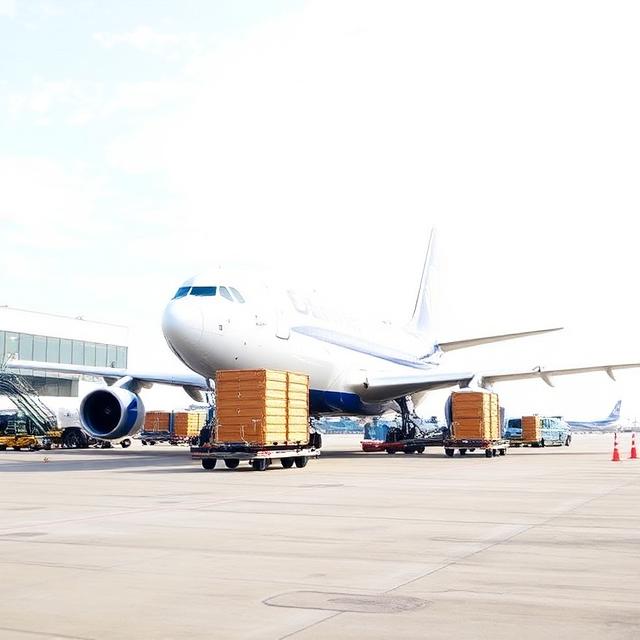
Air Cargo Market
Asia-Pacific accounted for a 43.50% share of the Air Cargo Market, led by China's export manufacturing corridors and India's digital commerce surge
GA, UNITED STATES, July 7, 2026 /EINPresswire.com/ -- The global air cargo industry has emerged from the turbulence of the pandemic era not merely recovered, but fundamentally transformed. What was once a cyclical business tied to manufacturing output and inventory restocking has become a strategic infrastructure layer for digital commerce, pharmaceutical supply chains, and time-critical global trade. According to a comprehensive report by Market Research Future (MRFR), the global air cargo market stood at USD 171.40 billion in 2025 and is projected to reach USD 315.90 billion by 2035, advancing at a compound annual growth rate of 6.30% through the forecast period. Two forces are pushing this trajectory: cross-border e-commerce volumes that doubled between 2019 and 2024, and a global pharmaceutical supply chain that now routes over 15% of temperature-sensitive shipments by air.The E-Commerce Explosion: Air Cargo as the Artery of Digital Commerce
The most visible transformation in the air cargo market is the explosive growth of cross-border e-commerce. Global cross-border e-commerce reached USD 1.6 trillion in 2024, with air-shipped parcels accounting for over 40% of international direct-to-consumer fulfillment. Platforms originating from China—Temu, Shein, and AliExpress—generated an estimated 7,000+ daily charter-equivalent cargo flights on the transpacific corridor alone in 2024. This structural shift has compressed transit-time expectations to under seven days for cross-border parcels, compelling forwarders to pre-position inventory in bonded warehouses near major gateway airports.
The E-Commerce & Retail segment is the fastest-growing end user, with cross-border parcel volumes expanding at double-digit rates on key Asia-to-West corridors. Amazon Air's expansion to over 110 aircraft by 2025 and the opening of a dedicated air cargo hub at San Bernardino International Airport— increasing U.S. West Coast e-commerce throughput capacity by 30%—exemplifies how integrators are building parallel infrastructure to match demand. This is not a temporary spike; it is a permanent elevation in the baseline volume that the air cargo market must absorb.
Get Report Sample Copy with TOC: https://www.marketresearchfuture.com/sample_request/8271
Pharmaceutical Cold Chain: The Premium Growth Engine
While e-commerce drives volume, the pharmaceutical cold chain drives value. Temperature-sensitive cargoes are currently the fastest-growing premium area in the air cargo market, with the global biologics pipeline surpassing 8,500 active candidates in 2024. Since 2020, GDP-compliant air corridors linking consumption hubs in the U.S. and EU with production clusters in Ireland, Singapore, and India have grown by 35%. Emirates SkyCargo and Lufthansa Cargo have collectively invested more than USD 600 million in pharma-certified hub infrastructure.
Special Cargo is accelerating at a 5.10% CAGR, propelled by pharmaceutical cold chain requirements and lithium-battery shipment protocols. Brussels Airport has emerged as the pharma logistics capital of Europe, processing over 100,000 temperature-controlled shipments annually. The segment's growth reflects a broader truth: as medicine becomes more personalized and more biologic, the tolerance for temperature deviation shrinks to near zero—and air cargo is the only mode that can guarantee that precision across continents.
Capacity Expansion: P2F Conversions and the Belly-Hole Gap
The air cargo market is addressing a structural capacity challenge. International passenger services have not fully recovered to 2019 levels on certain long-haul routes, creating a persistent deficit in belly-hold cargo supply. Passenger-to-freighter (P2F) conversions reached a record 92 aircraft deliveries in 2024, adding critical widebody capacity. Boeing and Airbus-affiliated conversion houses delivered platforms including the 737-800BCF and A330-300P2F, addressing demand on routes where belly cargo remains scarce.
Freighter aircraft currently account for 54.30% of the air cargo market by value, offering payload capacity and schedule reliability that belly cargo cannot match. However, belly cargo is recovering as international passenger services return to pre-pandemic frequencies, providing cost-effective incremental capacity on dense corridors. The interplay between dedicated freighters and belly cargo creates a dynamic pricing environment where carriers must optimize across both capacity types.
Digital Transformation: From Paper to Platform
The technology transformation underway in the air cargo market centers on digitization. Legacy paper-based airway bills and manual capacity allocation are giving way to ONE Record digital data-sharing frameworks and AI-powered dynamic pricing engines. IATA's target of 100% e-AWB adoption by end-2025 has accelerated investment in cargo management platforms, with airlines and forwarders collectively committing over USD 2.3 billion to digital infrastructure upgrades between 2022 and 2024.
Digital freight booking platforms—Freightos, cargo.one, and WebCargo—are transitioning from marketplace tools to ecosystem orchestrators. Real-time capacity visibility, API-integrated booking, and automated customs documentation are reducing transaction friction across the value chain. By 2030, digital intermediation may account for 15–20% of all booking transactions in the air cargo market, generating platform-economics dynamics that reward scale and data depth. Machine-learning algorithms already optimize dynamic pricing at carriers like Emirates SkyCargo and Cargolux, and by 2030, AI-powered yield management could improve airline cargo revenue per available tonne-kilometer by 8–12%.
Sustainability: SAF Mandates and the Green Premium
Regulatory tailwinds are reshaping the cost architecture of the air cargo market without dampening underlying demand. ICAO's Carbon Offsetting and Reduction Scheme for International Aviation (CORSIA) Phase 2 mandates and the EU's ReFuelEU Aviation regulation—requiring 6% sustainable aviation fuel (SAF) blending by 2030—are introducing new cost layers that carriers must absorb or pass through. In 2024, SAF premiums averaged three to four times the cost of conventional jet fuel, adding 3–8% to base freight rates depending on route and blending percentage.
Yet sustainability is also becoming a revenue opportunity. Airlines offering carbon-insetting programs—in which shippers pay a premium for certified SAF usage—are establishing tiered service categories. DHL's GoGreen Plus program and Lufthansa Cargo's "Sustainable Choice" product have attracted over 200 corporate clients willing to pay 8–15% surcharges for verified emission reductions. SAF production capacity is projected to reach 17.5 billion liters by 2030, up from roughly 1.5 billion liters in 2024. Airlines that secure long-term SAF offtake agreements will offer verified emission reductions to sustainability-conscious shippers, creating a green premium revenue tier that could account for 10–15% of total air freight revenue by 2035.
Buy Now: https://www.marketresearchfuture.com/checkout?currency=one_user-USD&report_id=8271
Regional Dynamics: Asia-Pacific Dominates, All Regions Grow
Asia-Pacific commands a 43.50% share of the air cargo market, the largest of any region, anchored by manufacturing export corridors in China and fast-expanding e-commerce fulfillment in India and Southeast Asia. The region is also the fastest-growing, posting a 6.80% CAGR through 2035. China alone accounts for 38.20% of regional share, with the world's busiest cargo airports in Hong Kong, Shanghai, and Incheon. India's air cargo throughput expanded 11% in FY2024, driven by e-commerce shipments and a government push under the National Logistics Policy to reduce logistics costs from 14% to 9% of GDP by 2030.
North America holds 24.50% of global volume, the second-largest region, benefiting from integrated express network density. Memphis, Louisville, and Anchorage serve as the backbone of FedEx and UPS hub-and-spoke networks. Mexico's emergence as a nearshoring destination has produced double-digit cargo growth at Guadalajara and Querétaro airports, while Canada's investments in cold chain infrastructure at Toronto Pearson and Vancouver support pharmaceutical distribution across the continent.
Europe accounts for roughly 22.00%, supported by pharmaceutical logistics hubs in Belgium and Germany. Frankfurt, Amsterdam Schiphol, and Liège form Europe's cargo triangle, handling over 40% of the continent's air freight tonnage. The EU's ReFuelEU Aviation regulation is the defining policy variable, requiring carriers to blend increasing percentages of SAF at EU airports from 2025 onward. The United Kingdom is growing at 5.80% CAGR, driven by post-Brexit trade routing and port-side bunkering development.
South America is advancing at a 5.80% CAGR, with Brazil dominating at 52.30% of regional share through agricultural and commodity exports. The region faces infrastructure gaps, but São Paulo's LATAM Cargo hub and Bogotá's expanding El Dorado cargo terminal are narrowing the quality divide with global standards.
The Middle East & Africa is valued at approximately USD 7.70 billion, with Dubai International and Al Maktoum airports together handling over 3.5 million tonnes of cargo annually. Saudi Arabia's investments in NEOM and King Salman International Airport signal a strategic push to challenge Dubai's dominance by 2030. Africa's air cargo volumes remain small but are growing rapidly, with the African Continental Free Trade Agreement (AfCFTA) creating regulatory harmonization that could double intra-African air cargo volumes by 2032.
Headwinds: Fuel Volatility, Slot Constraints, and Modal Competition
The air cargo market faces persistent challenges. Volatile jet fuel costs—accounting for 25–35% of overall operating costs—can swing carrier profits by ±20% in a single quarter. This volatility discourages long-term contract commitments from shippers and reduces profitability for committed freighter operators.
Airport slot and infrastructure constraints are tightening at major cargo gateways. Shanghai Pudong, Frankfurt, Hong Kong, and Chicago O'Hare are approaching operating capacity ceilings. Between 2019 and 2024, Heathrow's runway slot availability for freighter operations decreased by 18%, forcing airlines to use secondary airports with less advanced ground-handling facilities.
Modal shift to rail and sea presents a medium-term threat. China-Europe rail freight volumes grew 9% annually from 2020 to 2024, diverting mid-value manufactured goods that previously moved by air. Ocean carriers have introduced faster transit services on key corridors, narrowing the speed advantage of air cargo for shipments where 15–20 day delivery windows are acceptable.
Emerging Opportunities: Drones, Autonomous Handling, and New Hubs
Looking ahead, several emerging trends could reshape the air cargo market. Drone-enabled last-mile air cargo is gaining regulatory traction, with beyond-visual-line-of-sight (BVLOS) approvals in the U.S., EU, and India opening a new tier for payloads under 25 kg. Companies like Zipline and Wing have demonstrated commercial viability in pharmaceutical and retail delivery, with the addressable last-mile segment potentially reaching USD 12 billion by 2032.
Autonomous ground handling—robotic ULD stackers, self-driving tug vehicles—is in pilot deployment at Singapore Changi and Memphis, targeting 30% reductions in turnaround time. These technologies represent a productivity lever that scales independently of fleet expansion.
Emerging-market hub development is accelerating. Rwanda's Bugesera International Airport, Saudi Arabia's NEOM Bay Airport, and India's Noida International Airport (Jewar)—scheduled for Phase 1 operations by 2027 with dedicated cargo terminals processing 2 million tonnes annually—are designed with cargo-first operational layouts that challenge established hub hierarchies.
Competitive Landscape
The air cargo market exhibits low concentration, with the top five players collectively holding an estimated 28–35% of global revenue and a Herfindahl-Hirschman Index below 600. Major players include Deutsche Post DHL Group, FedEx Corporation, United Parcel Service, Kuehne + Nagel International AG, DSV A/S, Lufthansa Cargo AG, Emirates SkyCargo, Qatar Airways Cargo, Cargolux Airlines International, and Singapore Airlines Cargo.
Consolidation is accelerating. DSV's EUR 14.3 billion acquisition of DB Schenker in September 2024 created the world's largest freight forwarder with combined air freight volumes exceeding 2.5 million tonnes annually. Boeing announced an expanded 777-8 Freighter order book in July 2024, with commitments from Qatar Airways Cargo and Cargolux signaling next-generation widebody freighter investment.
Related Report
Cargo Transportation Market https://www.marketresearchfuture.com/reports/cargo-transportation-market-10192
cargo hold coating market https://www.marketresearchfuture.com/reports/cargo-hold-coating-market-39842
Cargo Handling Equipment Market https://www.marketresearchfuture.com/reports/cargo-handling-equipment-market-10190
US Cargo Handling Equipment market https://www.marketresearchfuture.com/reports/us-cargo-handling-equipment-market-20237
US Air Cargo market https://www.marketresearchfuture.com/reports/us-air-cargo-market-15824
stevedoring and marine cargo handling market https://www.marketresearchfuture.com/reports/stevedoring-marine-cargo-handling-market-41819
US Cargo Transportation market https://www.marketresearchfuture.com/reports/us-cargo-transportation-market-18329
Market Research Future
Market Research Future
+1 855-661-4441
email us here
Legal Disclaimer:
EIN Presswire provides this news content "as is" without warranty of any kind. We do not accept any responsibility or liability for the accuracy, content, images, videos, licenses, completeness, legality, or reliability of the information contained in this article. If you have any complaints or copyright issues related to this article, kindly contact the author above.
